Dispatch Nº 08 — Guatemala / Distrito Central

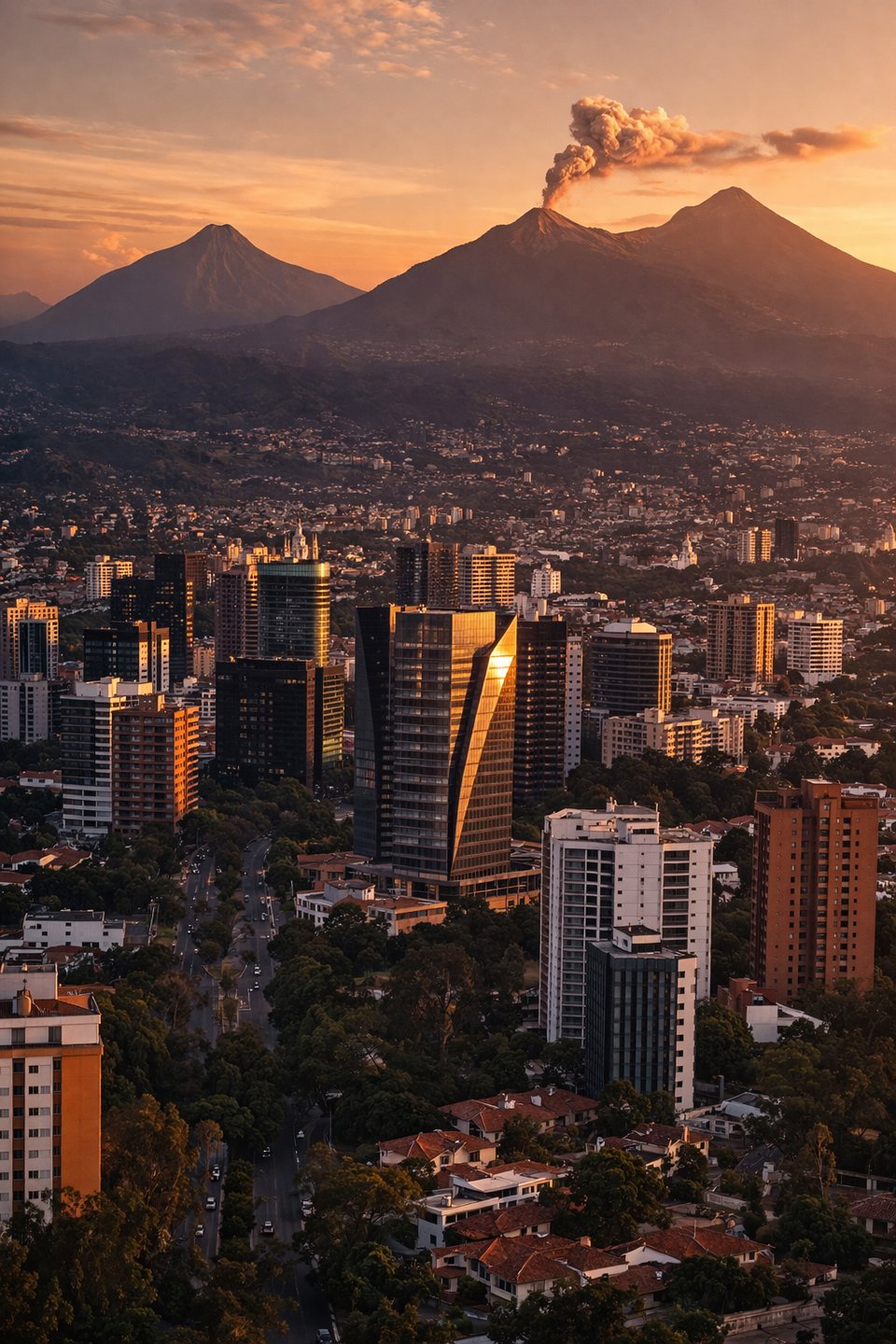
Guatemala City, beneath Volcán de Fuego.

A working field brief on the most under-written capital in Central America — which zonas earn your nights, how to think about safety honestly, and the Antigua-versus-here decision most travelers don't realize they're making.

Guatemala City at golden hour — modern Zona 10/14 skyline beneath Volcán de Fuego with active smoke plume
Dispatch · Nº 08
Altitude · 1,500 m
Volcán de Fuego
Above: Zona 10 / Zona 14 skyline · Fuego smoking, golden hour
§ 01 · The lay of the land

A city numbered into zones.

Guatemala City is organized into 22 numbered zonas, and as a visitor you only need to remember a handful: 10, 14, 4, and 16. Everything you'd reasonably want sits inside that short list, on a plateau at 1,500 meters, with three volcanoes — one of them actively smoking — visible from anywhere with a south-facing window. The rest of the city spreads outward into zonas you won't visit and shouldn't sleep in.

The honest pre-question: should you stay in Guate at all, or push straight to Antigua? Most short-trip travelers do the latter. The case for staying here is the food, the modern infrastructure, the airport-adjacency, and seeing a real Latin American capital before the colonial postcard. Below: the four zonas worth your nights.

§ 02 · Where to stay

Four zonas, numbered.

Maps show live inventory across Airbnb, Booking, Vrbo and Hotels.com. Zonas 1, 3, 6, 7, 18, 21 are deliberately not on this list.

File 02·A

Zona 10 (Zona Viva)

Hotel District · Walkable · $$–$$$

The default answer. Sometimes called "Zona Viva," this is where the international hotels, the embassy district, and most of the city's restaurants and bars sit. Walkable within itself, well-policed, and the easy choice for a first visit. Trade-off: corporate feel in places, especially along Avenida la Reforma.

See all stays in Zona 10 →
File 02·B

Zona 14

Upscale Residential · Quieter · $$$

South of Zona 10, wealthier, calmer, and where most of the diplomatic residences sit. Boutique hotels, residential streets, easy access to the airport. The trade-off is restaurants — you'll Uber north into Zona 10 for dinner most nights. Best for travelers prioritizing quiet and space over walking access to nightlife.

See all stays in Zona 14 →
File 02·C

Zona 4 (Cuatro Grados Norte)

Creative Pocket · Walkable · $$

The interesting answer. The Cuatro Grados Norte pedestrian corridor is the city's small-but-real creative district — restored buildings, design studios, independent restaurants, and the actual culture scene of Guate. Smaller hotel inventory, but where to stay if you want neighborhood character over hotel-corridor predictability.

See all stays in Zona 4 →
File 02·D

Zona 16 (Cayalá)

Master-Planned · Polished · $$$

Paseo Cayalá is a 2010s-era master-planned development on the far east side — pedestrian streets, modern boutique hotels, fine dining, security gates. Feels more like a Florida suburb than a Latin American capital. Some travelers love this; others find it sterile. Worth knowing about as the polished-bubble option.

See all stays in Zona 16 →
§ 02·x · Numbered overview

The four-zona corridor.

All four zonas pinned on one map. South-central plateau only.

Aggregated inventory · Airbnb · Booking · Vrbo · Hotels.com
§ 03 · Ground rules

The honest safety calculus.

Guate has a real reputation, and most of the reputation is rooted in zonas you have no reason to visit. Six rules that get you a clean trip in the zonas that actually matter.

Rule 01

Stay in 10, 14, 4, or 16

The "Guate is dangerous" headlines are largely about Zonas 1, 3, 6, 7, 18, and 21. The four zonas above are statistically a different city. Stay inside them and you're fine. Don't wander into the others "just to see."

Rule 02

Uber, always

Apps work everywhere in the central zonas. Rides are cheap by dollar standards. Skip street taxis, skip the chicken buses unless you're with a guide, skip the moto-taxis.

Rule 03

The Centro Histórico is a daytime visit

Zona 1 has the Palacio Nacional, the Catedral, and Sexta Avenida. Worth a half-day. Go with a daypack only, leave the camera-strap obvious tourist-kit at the hotel, and Uber back to Zona 10 by sunset.

Rule 04

Antigua is one hour away

The big decision: split your nights or commit to one base. If you have less than four nights, base in Antigua and day-trip to Guate. If you have more, do both. Antigua is the postcard; Guate is the actual country's capital.

Rule 05

The volcano is real

Volcán de Fuego is genuinely active. Ash falls on the city occasionally. Pacaya hikes are spectacular but check current activity before you book. The drama is what makes the skyline; respect it.

Rule 06

Spanish opens everything

English exists in the international hotels, embassies, and high-end restaurants. Outside that, you're in Spanish. Learn the basics. Guatemalan Spanish is one of the clearer accents in Latin America — you'll be okay.

§ 04 · Further dispatches

The Briefing.

Longer field notes, the Antigua-vs-Guate decision tree, day-trip logistics to Lake Atitlán and Tikal, the volcano-hike calculus, and the Cuatro Grados Norte food map.

Read the briefing →